

By Green Gorilla Turf Editorial Team · Updated October 30, 2026
Why Does Tampa Turf Need Special Drainage?
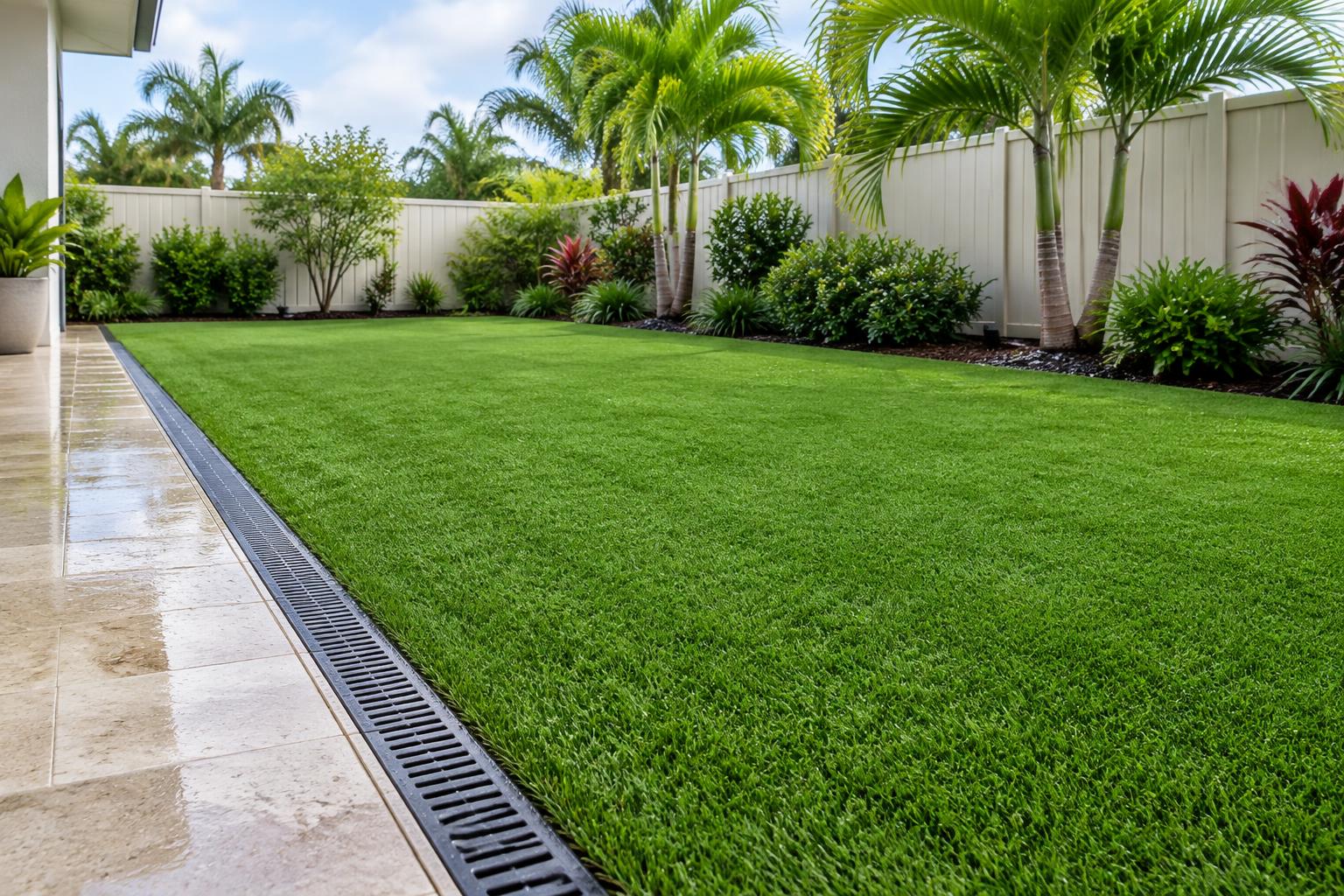
Tampa's subtropical climate delivers heavy, frequent rainfall that overwhelms standard turf installations. Without engineered drainage, property owners face standing water, mud, and turf failure within the first rainy season. We design every Tampa project around the region's intense rainfall, relentless sun, and sandy soil conditions. The process includes meticulous base preparation and the best drainage solutions for turf installation specific to Florida's weather patterns.
How does heavy rainfall affect artificial turf in Tampa?
Tampa's rainfall arrives in sudden, torrential downpours. A turf system without proper drainage traps this water, creating soggy surfaces and breeding mosquitoes. Our approach prevents these problems by building a permeable compacted base that lets rainwater pass straight through the turf assembly.
What makes Florida's soil a challenge for turf drainage?
Sandy soil drains quickly but shifts and settles under heavy use. This instability compromises the base layer over time. We account for this by engineering a compacted foundation that resists erosion while maintaining rapid permeability. Our team has refined this drainage approach over 25 years of installations across Florida, improving the method with every project.
The complete system sits on that permeable compacted base, ensuring water moves through immediately rather than pooling on top. For properties with pets, this fast-draining design pairs naturally with our pet turf installation systems, where odor control and cleanliness depend on rapid moisture removal. We also specify antimicrobial infill or non-infill options for sensitive areas like playgrounds and daycare spaces. Every installation receives the same rigorous attention to drainage, because Florida's weather punishes shortcuts.
What Sub-Base Aggregate Stops Standing Water?
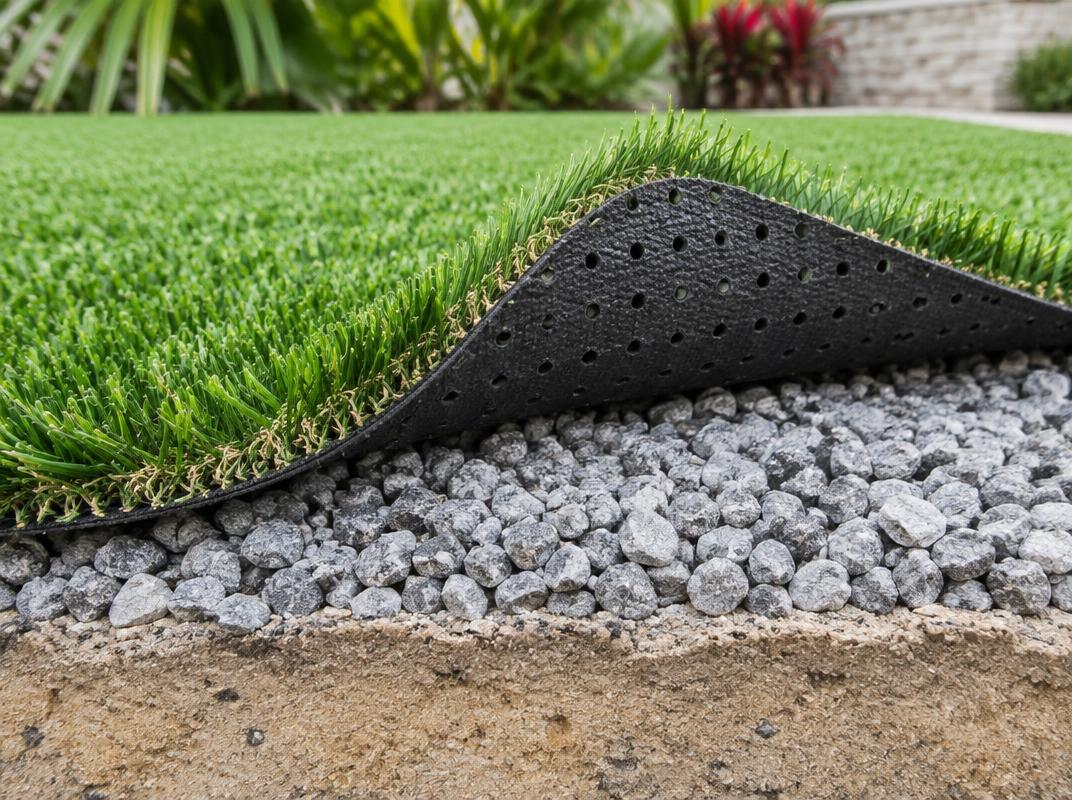
A coarse, free-draining aggregate base stops standing water under artificial turf. The base layer must stay permeable after compaction so rainwater passes straight through into the soil below. Without that combination, Tampa's heavy rainfall pools on the surface and turns a synthetic lawn into a swamp.
We engineer every drainage solution for turf installation around Florida's sandy soil conditions. Sandy soil drains fast, but it also shifts. That means the sub-base needs both open pore space for water movement and enough structural integrity to hold the turf stable through intense sun and downpours.
What makes a base layer permeable and stable?
Follow these steps in order when building the sub-base:
- 1. Excavate the existing soil to the required depth for the turf profile.
- 2. Lay a coarse, free-draining aggregate across the entire installation area.
- 3. Compact the aggregate in lifts to create a stable, load-bearing surface.
- 4. Verify that water still moves through the compacted base before turf goes down.
The whole assembly sits on a permeable compacted base. Compaction locks the aggregate together, yet the coarse stone leaves void spaces between particles. Those voids are what let rainwater escape instead of backing up under the turf backing.
Why does base preparation matter more in Tampa?
Proper base preparation is the foundation of turf longevity in Florida's climate. We have spent over 25 years installing synthetic turf across Tampa and the surrounding counties. Every project we build starts with meticulous base work because the base determines whether the lawn drains for a decade or fails in two rainy seasons.
Our synthetic lawn installation process includes site preparation and base construction specific to each property. We design around the region's heavy rainfall and sandy soil conditions. A base that works in clay-heavy Georgia soil will not perform the same way in Tampa's fast-draining sand.
Does the turf backing affect drainage?
The backing matters as much as the aggregate. We install turf with a fully permeable or flow-through backing over the coarse base. That pairing lets water move through the turf face, through the backing, and into the aggregate below without obstruction. A non-permeable backing traps water no matter how good the base underneath happens to be.
How Does Permeable Turf Backing Move Water?
A permeable turf backing moves water by letting liquids drain straight through the turf surface instead of pooling on top. The backing works as a flow-through layer that passes rainwater and pet urine directly into the base below. Without this drainage path, Tampa properties collect standing water that breeds mosquitoes and kills grass.
We install a short, dense, lead-free fiber with a fully permeable or flow-through backing over a coarse, free-draining base. The backing itself contains openings that let liquid pass immediately. That liquid then hits the coarse base, which channels it away from the surface. This combination forms one of the best drainage solutions for turf installation in Tampa's heavy afternoon downpours.
What happens to water after it passes the backing?
Water moves through the backing and into the coarse, free-draining base beneath. The base spreads the water across a wider area so it percolates into the soil gradually. Tampa's sandy soils accept this flow well, which prevents surface puddling.
Why does fiber density matter for drainage?
Short, dense turf fiber resists matting under foot traffic. Matting compresses the surface and blocks drainage channels. Our resilient fiber keeps those channels open, so water keeps moving even where children run, land, and pivot. For wet, barefoot areas like pool decks, the same quick-draining principle applies to poolside artificial turf.
We finish the system with an antimicrobial coated infill, typically zeolite-based. The infill captures and neutralizes liquids rather than letting them sit in the surface. For heavy-use areas, we can specify a non-infill system to simplify drainage further. That option removes the infill layer entirely, leaving fewer materials for liquid to pass through.
When Do You Need Subsurface Drainage Tiles?
Subsurface drainage tiles become necessary when standard turf drainage cannot handle the liquid volume a property generates. Heavy daily use from multiple dogs, kennels, or breeding operations overwhelms typical permeable bases. Without a dedicated drainage tile layer, urine and wash-down water saturate the sub-base and create persistent odor problems that no amount of surface rinsing resolves.
How does a drainage tile system work under artificial turf?
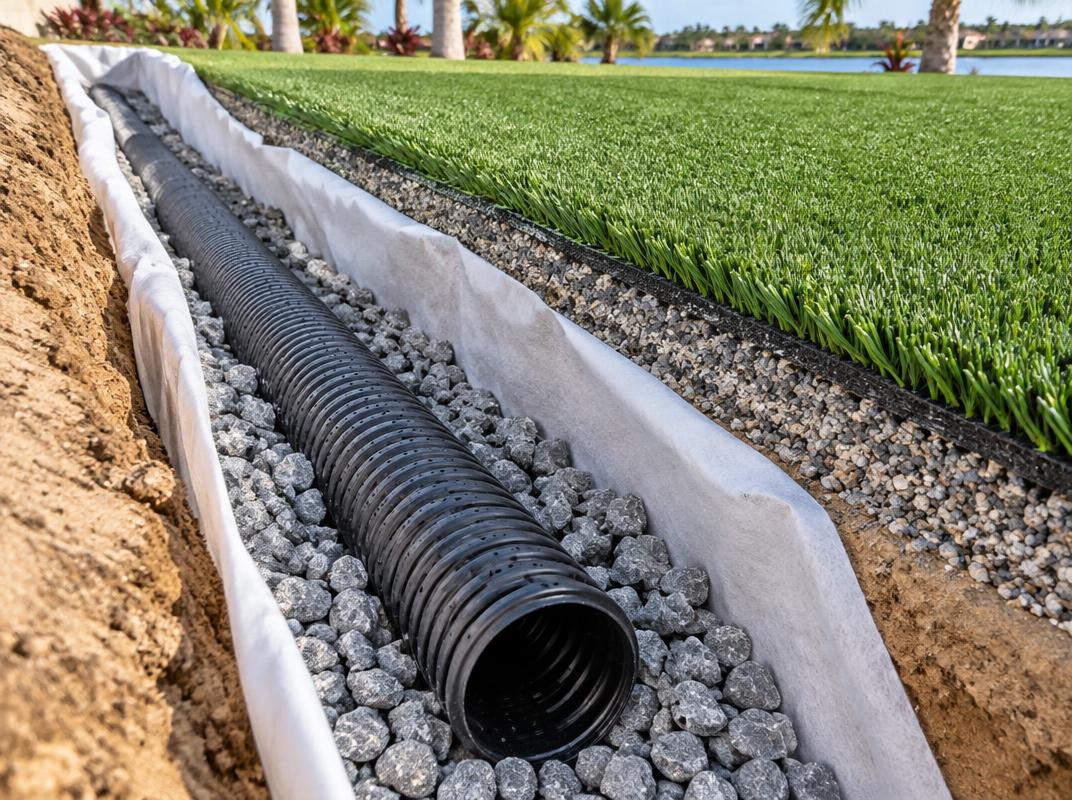
A drainage tile layer sits directly beneath the turf backing, capturing liquids as they pass through and channeling them through perforated pipes before entering the base. We pair this with sub-surface collection when the site layout demands it. The result is a system that moves liquids out fast, even under the punishing daily load of a multi-dog household or commercial kennel.
What happens to Tampa turf without proper drainage during heavy rain?
Tampa's torrential rainstorms expose every weakness in a turf drainage design. Surface pooling develops where water cannot percolate through the base quickly enough. That standing water degrades infill, breeds bacteria, and turns a low-maintenance lawn into a soggy mess. Our drainage engineering accounts for these downpours from the first shovel of base excavation. We size every layer to handle Florida's rainfall intensity so water never lingers on the surface.
Playground installations add another variable. A shock-absorbing foam pad sits above the drainage base, sized precisely to the fall height of the play structure. That pad must never trap water beneath it. We sequence the installation so the foam layer integrates with the drainage profile, keeping the safety surface dry and functional. For pet owners, breeders, and anyone managing heavy liquid loads in Tampa, subsurface drainage tiles transform a chronic wet-area problem into a permanently dry, odor-controlled surface.
What Mistakes Ruin Turf Drainage in Tampa?
Tampa's heavy rainfall and sandy soil punish drainage mistakes quickly. Poor drainage turns artificial turf into a soggy, unusable mess. We see four recurring errors that destroy turf performance across Tampa properties.
What happens when base preparation gets skipped?
Skipping proper base preparation leads to premature turf failure and standing water issues. Our 25 years of synthetic turf experience across Tampa proves that the base layer determines drainage success. A poorly compacted or incorrectly graded base traps water beneath the turf surface. That trapped water breeds odors, attracts insects, and breaks down the turf backing over time.
Why does subcontracting create drainage problems?
Subcontracted installations compromise quality and consistency in drainage engineering. We keep every Tampa installation 100% in-house, never subcontracted. Our crews follow the same drainage specifications on every project. That consistency prevents the corner-cutting that ruins turf drainage when outside crews rush through base work.
Which turf backing choice causes standing water?
Choosing a turf without a fully permeable backing traps water and creates muddy, unusable areas. We install turf with a fully permeable or flow-through backing over a coarse, free-draining base. This combination lets Tampa's afternoon thunderstorms pass straight through the surface. A non-permeable backing acts like a plastic sheet, holding water against the turf fibers.
How do homeowners verify drainage before installation?
A free on-site estimate lets homeowners verify the drainage plan before committing to installation. We walk every Tampa property to assess slope, soil type, and existing drainage patterns. That assessment shapes the base design and turf selection. Skipping this step risks installing turf that fights the property's natural water flow.
What protects against drainage defects after installation?
Workmanship is backed by a 3+ year warranty, protecting against drainage installation defects. That warranty covers the base preparation and drainage engineering we perform. If drainage fails due to our installation, we correct it. Homeowners facing turf replacement from prior drainage failures often discover the original base was never built correctly.
Conclusion
For Tampa homeowners, the drainage solution comes down to what happens beneath the surface: a permeable backing, a coarse base, and proper grading work together to move water fast. Before committing to an installation, verify the base plan and confirm the crew builds it in-house, because a skipped step turns a dry lawn into a soggy problem. The right system keeps water moving, so the turf stays dry through every storm.